Budgets
DESIGN LEADERSHIP
SYSTEMS THINKING
Brand Budgeting: Rebuilding Trust in a Broken Financial Tool
Company: Aspire | Role: Design lead, in close partnership with a Product Manager | Timeline: 3-day design turnaround, followed by engineering build and rollout
Impact summary
Partnered with a Product Manager on a 3-day redesign of Aspire's budgeting tool after a top-10 revenue account threatened to churn over inaccurate, confusing budget numbers. The CEO personally selected the design in a team-wide review, and the account was retained.
The problem
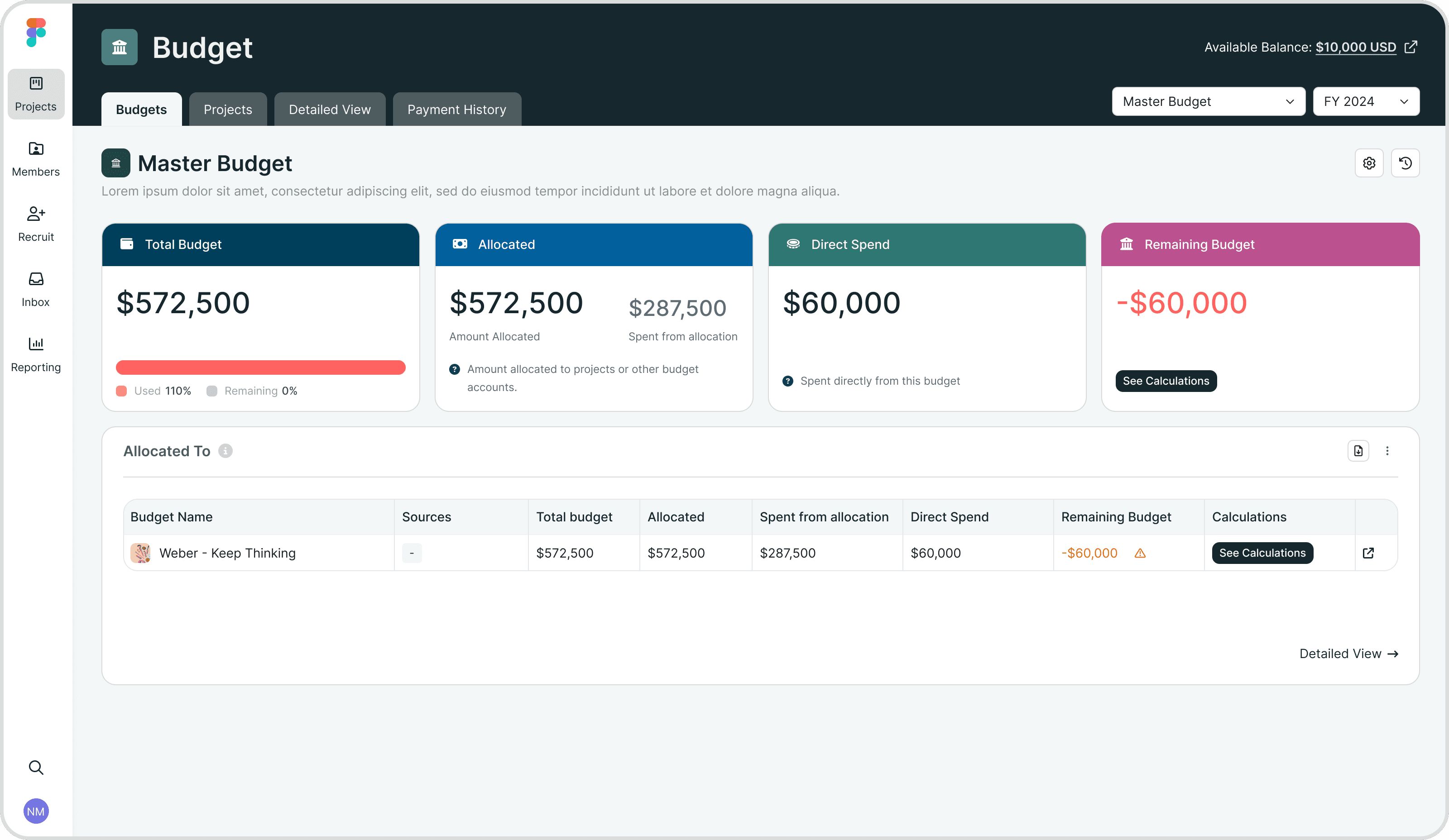
The existing budgeting feature had lost users' trust. It required brand users to create a "master budget," set an amount, then manually allocate portions of that master budget down to individual project budgets. If that setup wasn't done correctly, the numbers simply didn't add up. On top of that, the transaction history didn't clearly show users why a payment was made or which project it belonged to. For a tool tracking real money, that combination of complexity and inaccuracy was enough to put a top-10 account on the verge of leaving.
My role & the constraint that made it hard
I partnered directly with a Product Manager to diagnose and redesign the experience under real time pressure, with a CEO-level escalation attached. The constraint wasn't just speed, it was designing something simple enough to rebuild trust immediately, without losing any financial accuracy the account actually depended on.
Process
Discovery: The PM and I worked through what could be cut from the existing feature and what still needed to exist, talking through the logic of how transaction history should actually work and display before writing any requirements.
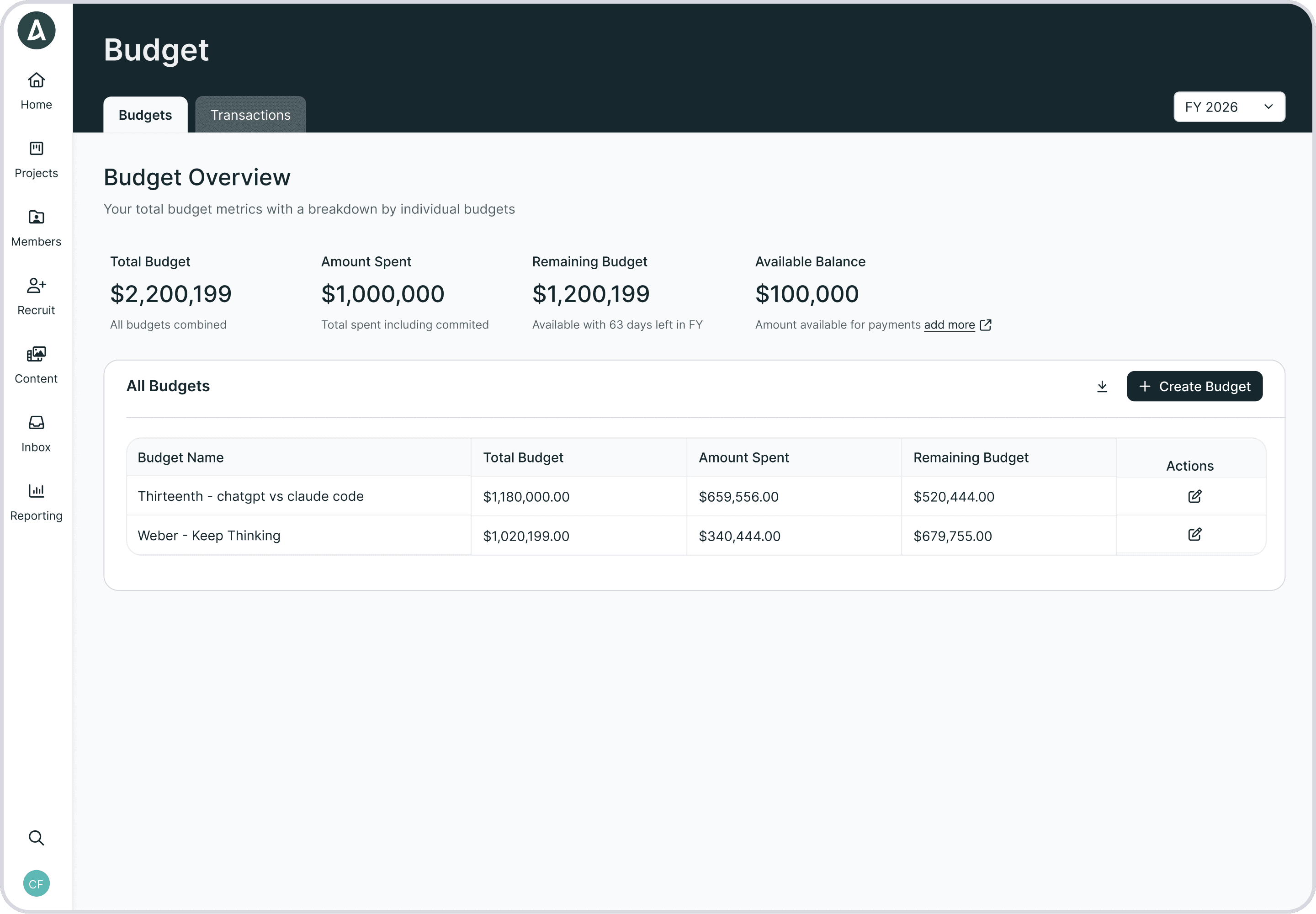
Key decision: We killed the allocation model entirely. Instead of a master budget that had to be manually divided across project budgets, individual project budgets simply added up to the total. This removed an entire layer of user-managed complexity that had been the root cause of the numbers not matching.
Where I pushed back: An offshore team was independently working on their own solution to the same customer complaints. In my assessment, and the CEO's, their proposal didn't fully resolve the core issue; it addressed symptoms without removing the allocation model that was actually causing the confusion. Rather than defer to the existing solution already in motion, I chose to present a competing direction to the broader team and made the case for it directly to leadership.
The solution
The redesigned Budget tab surfaces Total Budget, Amount Spent, Remaining Budget, and Available Balance at a glance, with a clear warning state when a budget goes negative.
Every key metric includes a hover card breaking down exactly how it's calculated, turning an opaque number into something a user can verify themselves.
The Transactions tab supports bulk actions like assigning transactions to a budget or project, making it easier to manage high transaction volume without leaving the page.
Outcome
Presented a competing direction against an offshore team's proposed solution, and won leadership's backing, including the CEO's, who said, "We're going with Collin's design."
The escalated top-10 account responded positively to the proposed solution and was retained.
The team was disbanded shortly after the feature shipped, so longer-term adoption or support-ticket data was never collected. The outcome here is real and verified at launch, just not backed by post-launch metrics.